Premium Zone vs Discounted Zone: Why Your Entry Price Matters
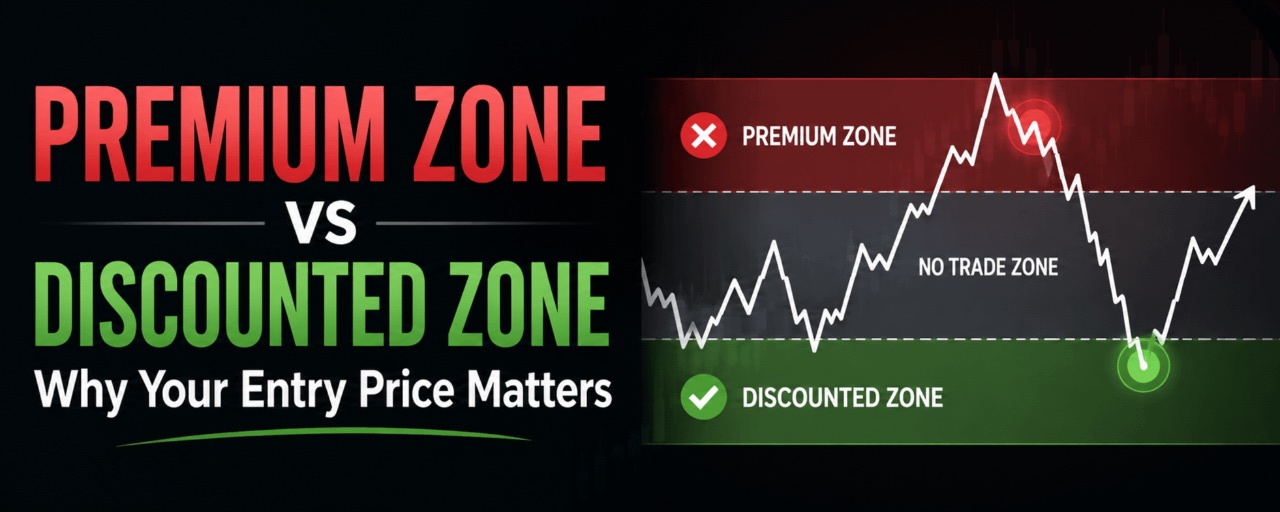
Many traders focus on finding the perfect signal but overlook where they are entering. A candlestick pattern, indicator signal or breakout can explain why a trade looks interesting, yet entry location often determines whether the risk to reward makes sense.
Before entering, ask one important question: am i buying or selling at a good price within the current market range? Where you enter matters just as much as why you enter.
- ✓A good setup can still produce a poor trade when the entry location is wrong.
- ✓We establish higher timeframe direction before marking premium and discount zones.
- ✓With a bullish bias, discount can offer better long locations; with a bearish bias, premium can offer better short locations.
- ✓When price is in the middle of the range, waiting can be the strongest decision.
Educational content only. Not financial advice. Premium and discount are location tools, not guarantees that a trade will succeed.
01Why Entry Location Matters
Two traders can share the same directional idea and still achieve very different outcomes. One may enter near the favorable edge of the range with a clear invalidation point, while the other enters after price has already travelled most of the expected move.
Better location does not guarantee a winning trade, but it can improve the relationship between potential reward and the amount of capital at risk. That advantage matters over a large sample of trades.
02Higher Timeframe Bias Comes First
Before marking premium or discounted zones, we need to understand market direction. We zoom out to a higher timeframe and ask whether the structure is bullish, bearish or unclear. This becomes our higher timeframe bias.
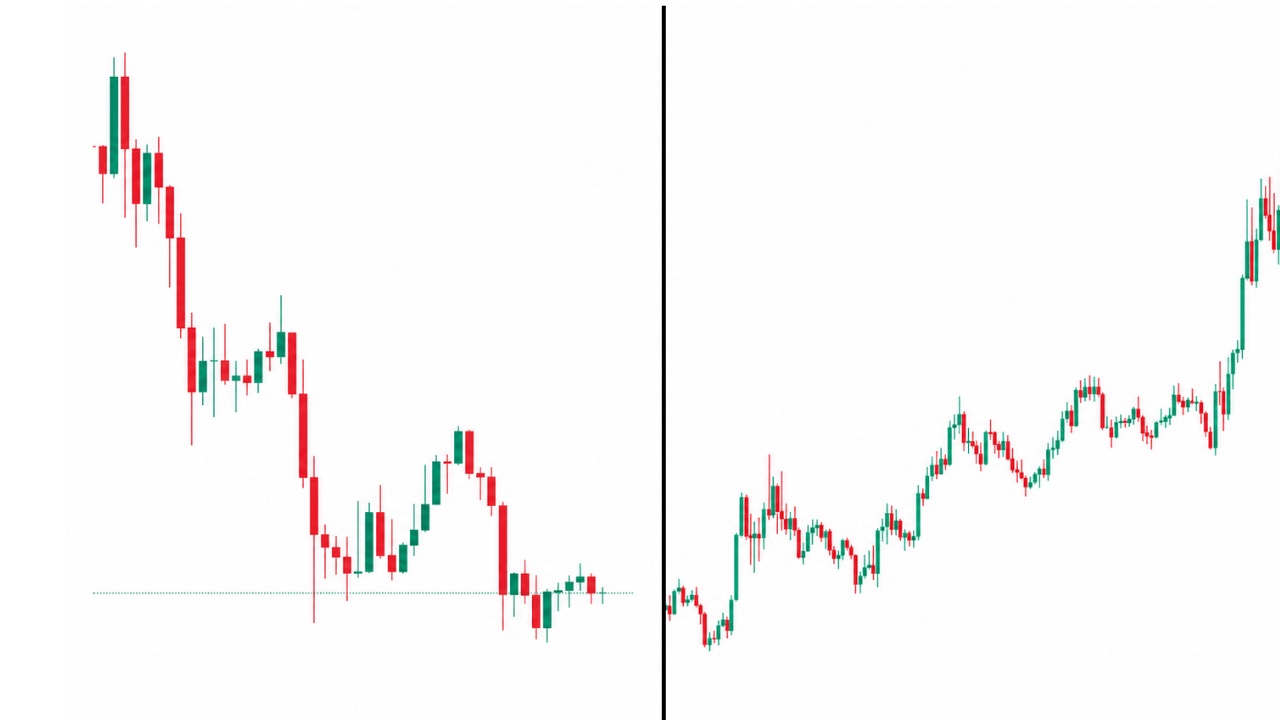
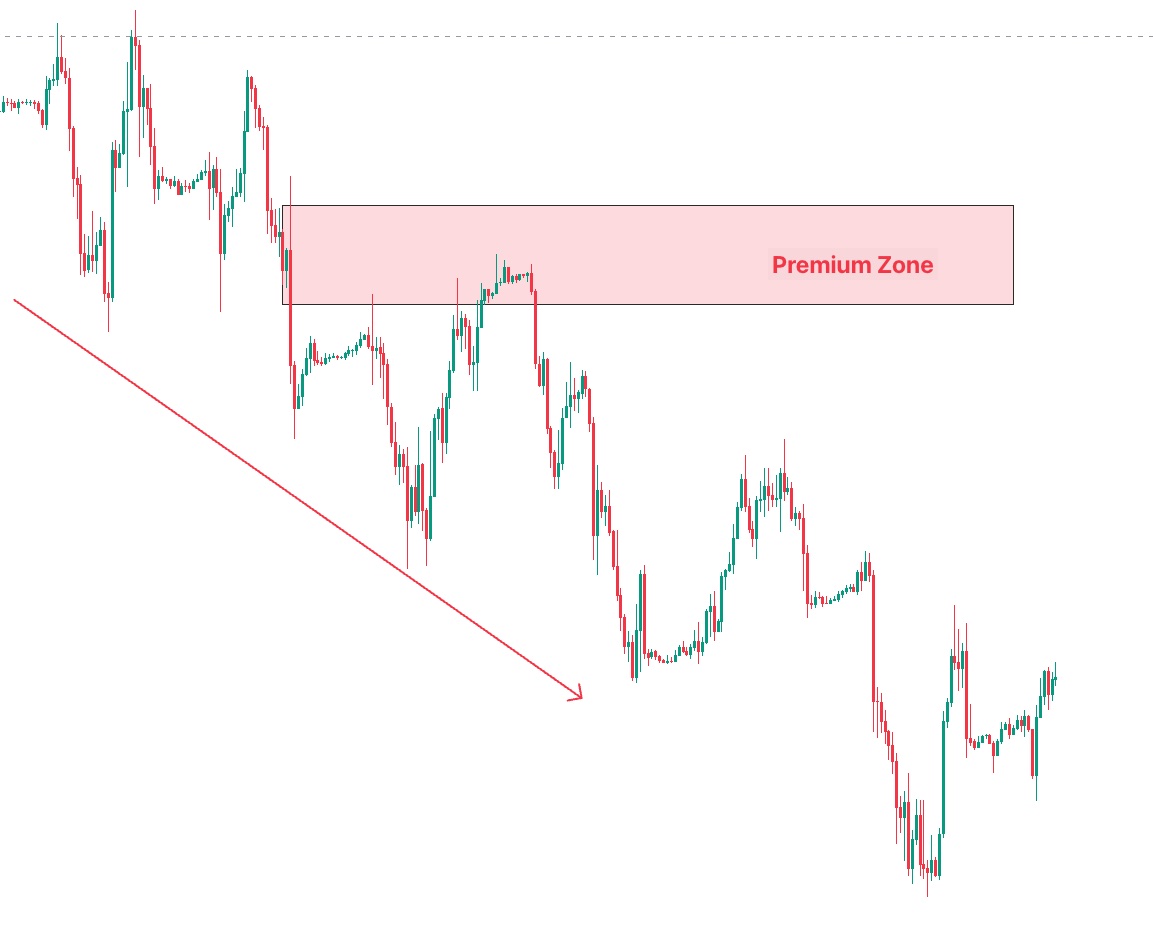
Once the direction is clear, we look for an entry area that supports it. If the bias is bullish, we generally prefer to investigate long setups lower in the range. If the bias is bearish, we generally prefer to investigate short setups higher in the range.
03How To Use The Discounted Zone
A discounted zone is the relatively cheap area of the current dealing range. When our higher timeframe bias is bullish, this is where we begin looking for buying opportunities. Every visit does not have to bounce, but the location can offer better trade economics.
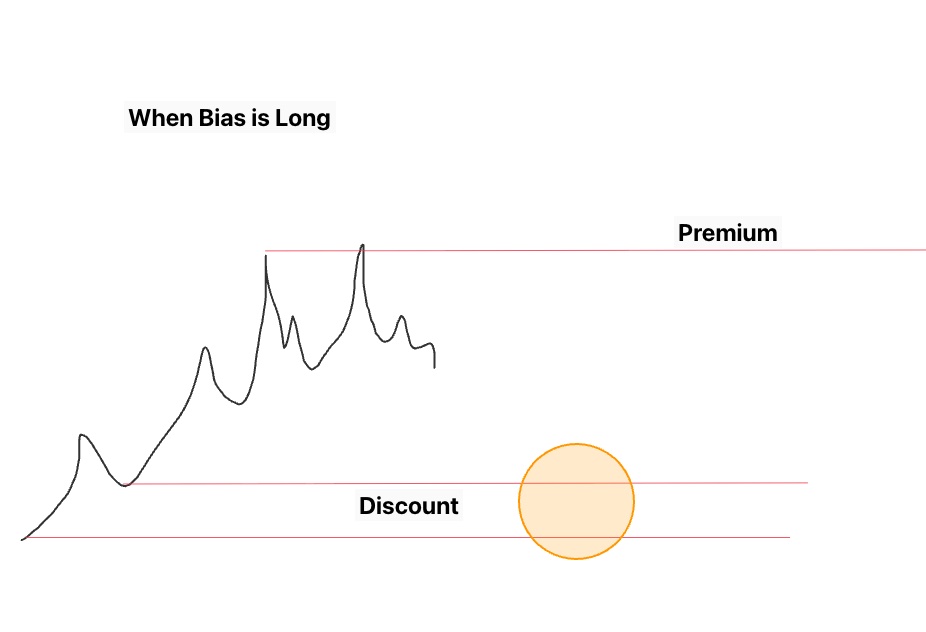
- Risk can be smaller because the invalidation point may remain relatively close.
- Potential reward can be larger because price has more room to move through the range.
- The trade location can provide a more favorable risk to reward profile.
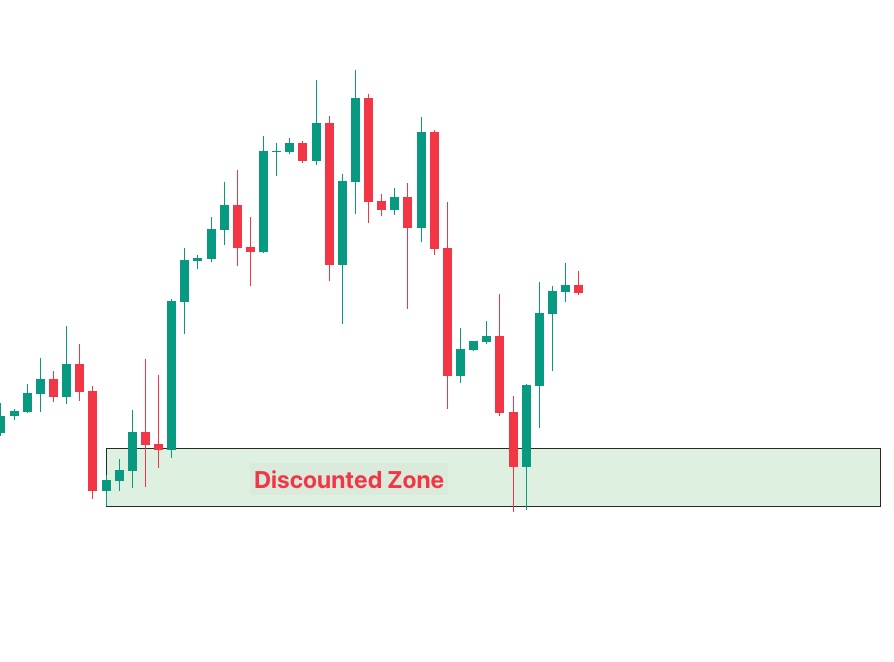
We can think of it like shopping: if an item we already want is offered at a discount, paying the lower price is usually preferable to chasing it later. In trading, we still need confirmation and a valid risk plan, but location helps improve the opportunity.
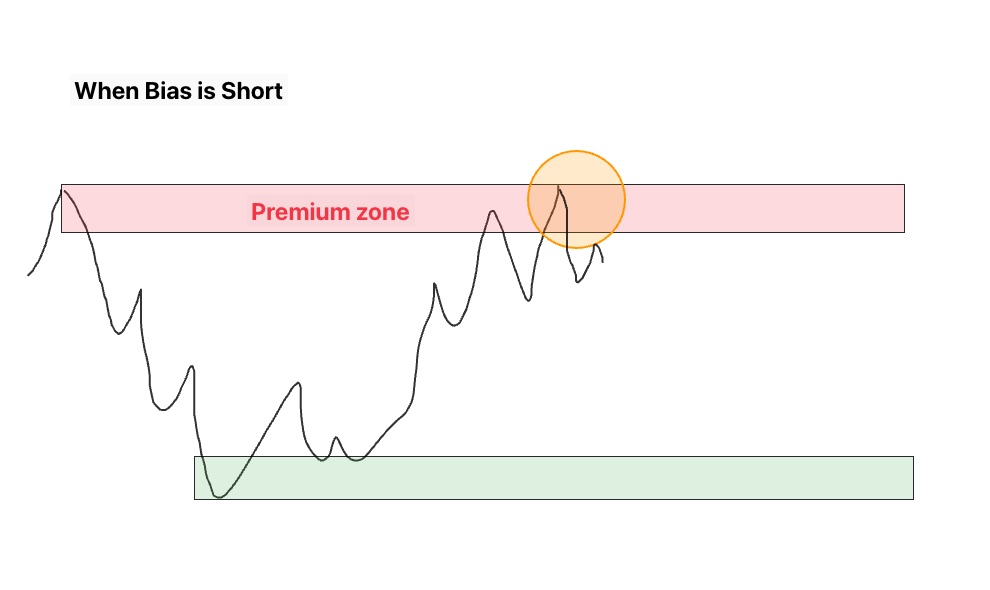
04How To Use The Premium Zone
The premium zone is the relatively expensive area of the range. Buying there after a large move can create several problems, even when the larger trend is bullish.
- There is less room for price to continue higher before reaching resistance.
- The stop may need to be wider if the correct invalidation level is far away.
- Potential reward becomes smaller relative to the risk being taken.
- The probability of a pullback or reversal may increase at the expensive end of the range.
This is why traders sometimes feel that the market drops immediately after they buy. Their directional idea may not be completely wrong; the entry may simply be at an expensive location.
05The No Trade Zone
Sometimes price sits in the middle of the range. It is neither clearly cheap nor clearly expensive. We call this the no trade zone because it often provides no strong location advantage.
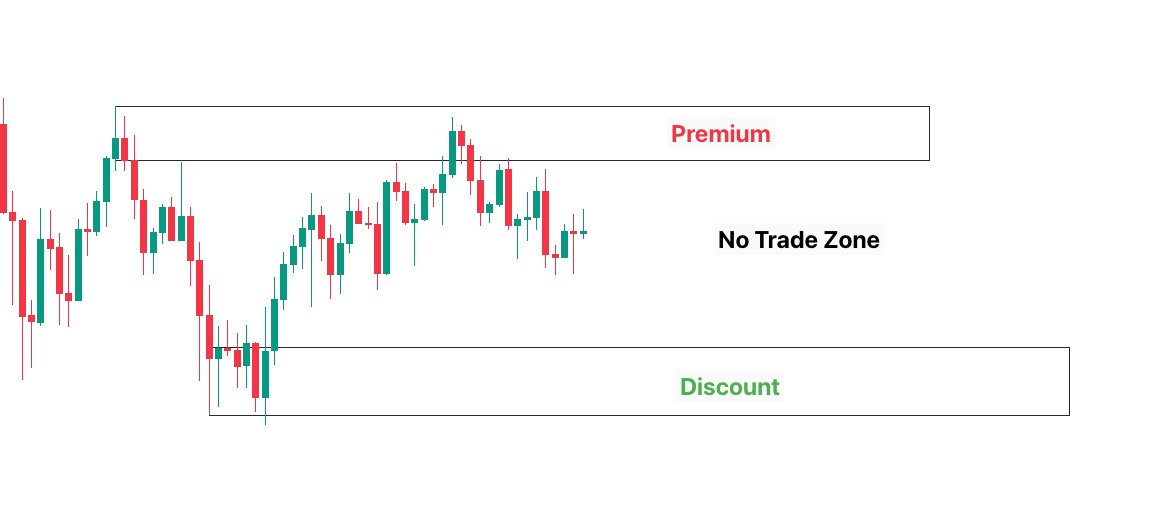
Boredom and fear of missing out can tempt us to force a trade in the middle. However, not trading is also a trading decision. If the edge is unclear, waiting for price to reach a meaningful premium or discount area can protect capital.
06A Practical Decision Process
Premium and discount zones work best as part of a complete decision process. We can use the following sequence before considering an entry:
- 1Zoom out and establish whether the higher timeframe structure is bullish, bearish or unclear.
- 2Mark the active dealing range and identify its premium, middle and discounted areas.
- 3Wait for price to reach a location that supports the higher timeframe bias.
- 4Use lower timeframe confirmation to refine the entry instead of entering on location alone.
- 5Define invalidation, position size and risk before placing the trade.
This framework helps us stop chasing signals in isolation. Direction, location, confirmation and risk management work together; removing any one of them can weaken the setup.
Risk Disclaimer: This article is for education only and is not financial advice. No entry technique guarantees a winning trade. We must do our own research, define invalidation and manage position size carefully.
This guide was adapted for our website from our original Binance Square article.
Educational content only. Not financial advice. Trading involves risk.